BREWSTEAD SUPPLY / PRACTICAL GUIDES
Choose coffee storage by capacity, access and closure
Read bean-weight labels, liquid volume, valves, date trackers and cleaning access without false freshness promises.
Choose the amount you actually keep between refills
Start with your usual supply and shelf space, then compare container dimensions and usable access. A large nominal volume may be less useful if you must move the machine to lift the lid. A small canister can be inconvenient if it needs constant refilling. The goal is a container that works with the quantity and place you use, not the largest bean-weight number on a listing.
Do not equate grams, fluid ounces and scoop measures
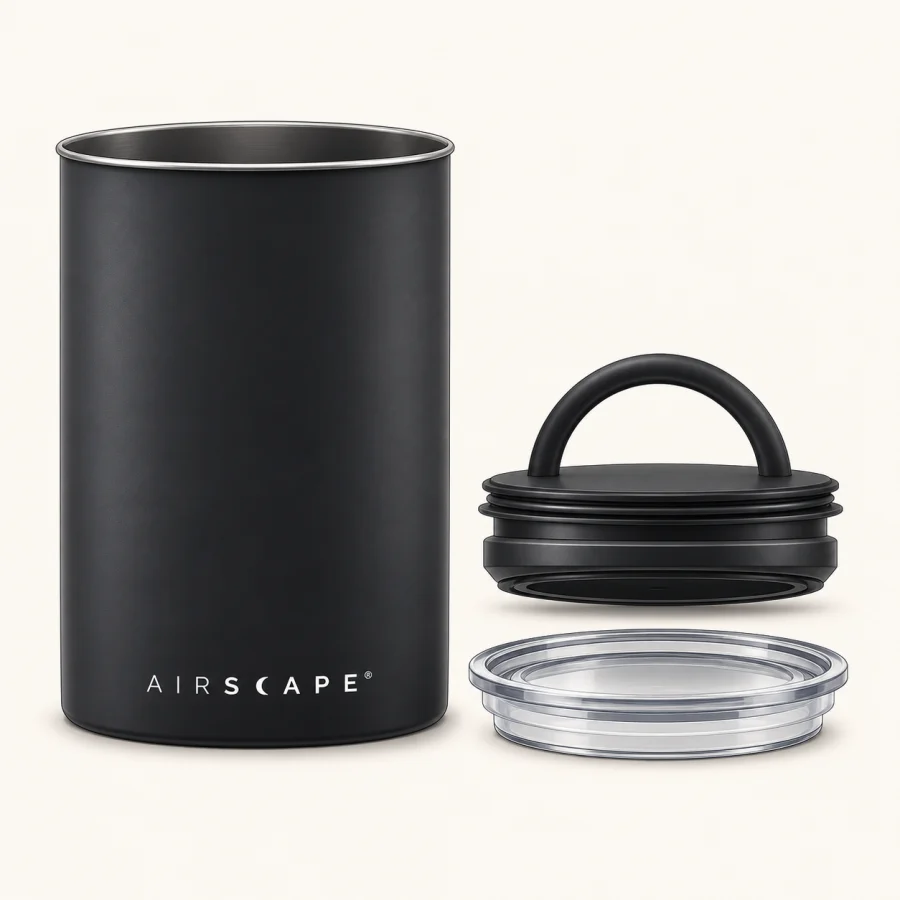
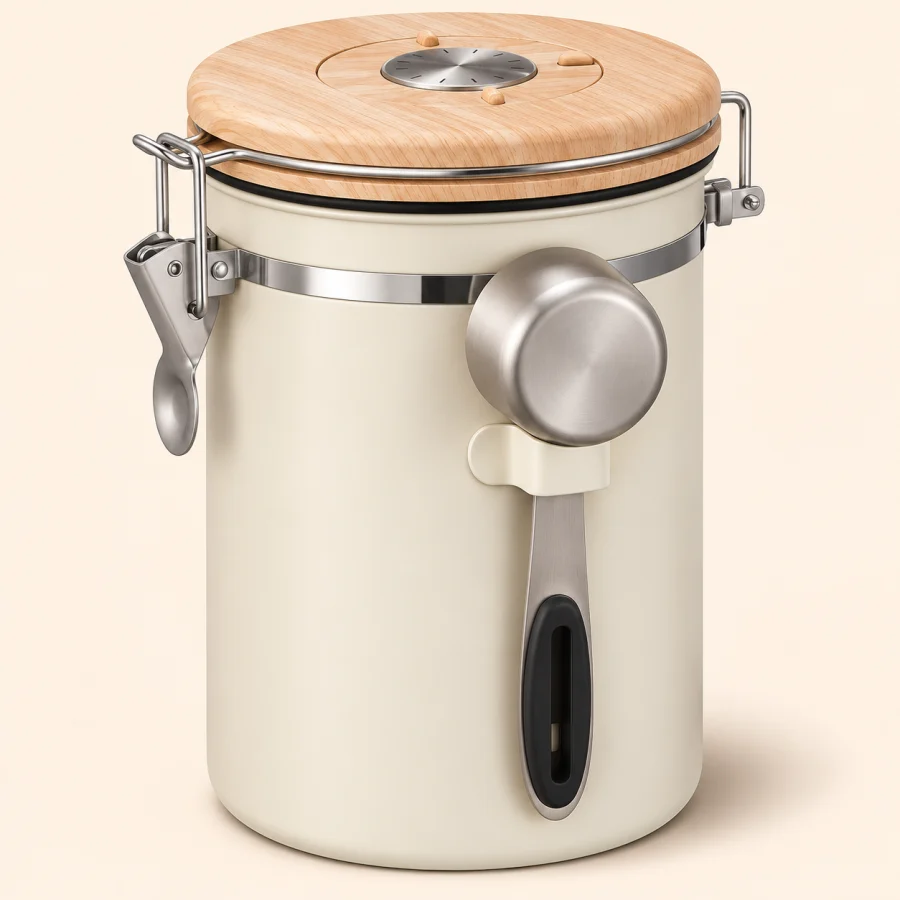
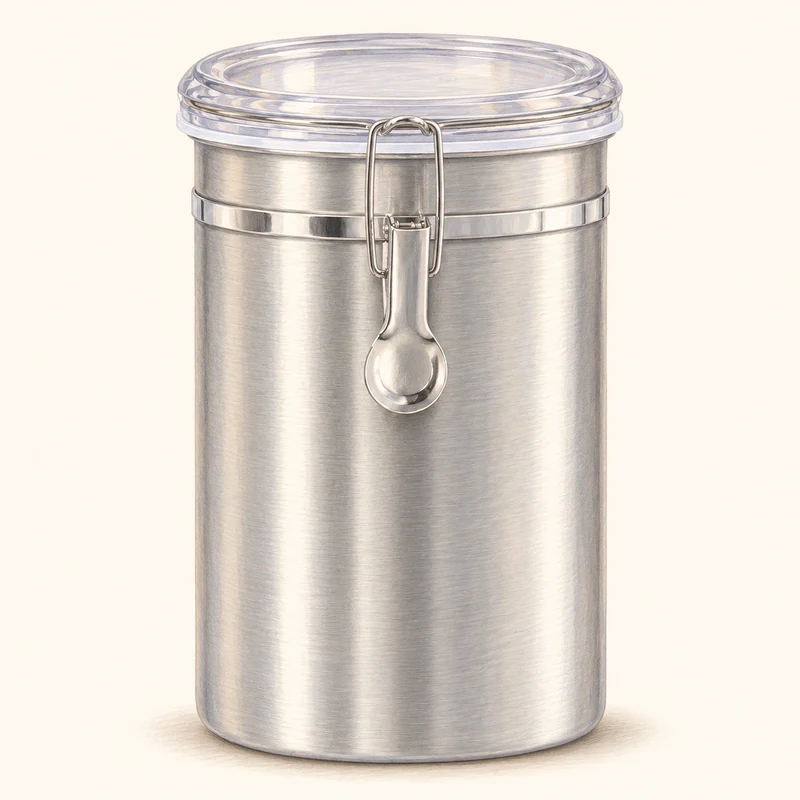
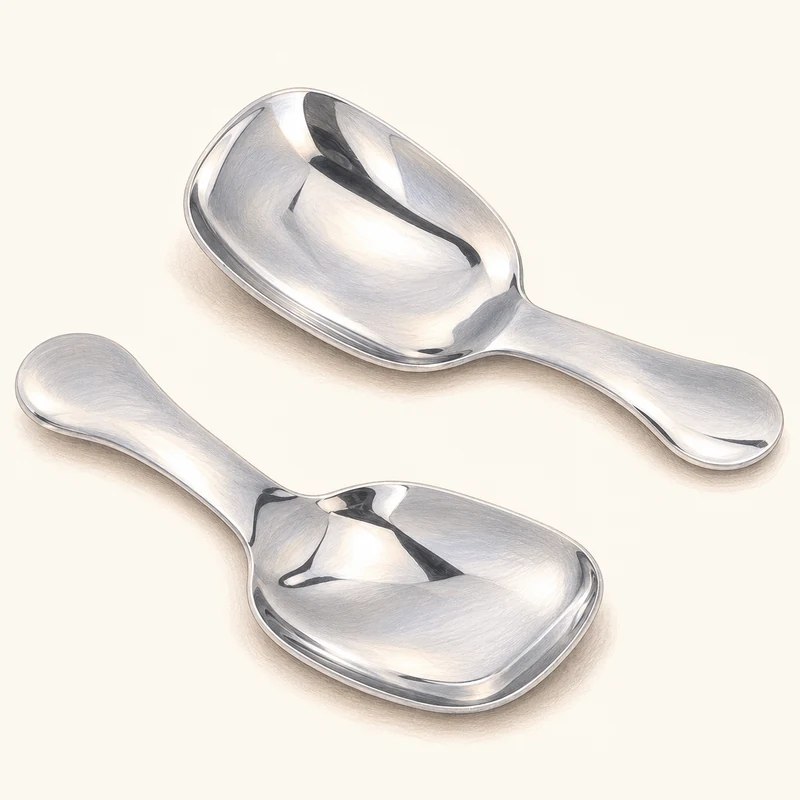
The Airscapesource describes a 500 gcoffee format while a capacity field uses 500 ml; those are different quantities. OGGI's 62 fluidounces describe volume, not 62 ounces of beans by mass. A leave-in scoop is listed as a quartercup/60 mlmeasure, but its coffee mass varies with what fills it. Keep a scale available for recipes in grams rather than treating storage or scoop labels as calibrated doses.
Compare closure design without inventing a shelf life
The Airscapeuses an inner air-removing lid. The Veken lists a one-way CO2 valve and silicone seal; OGGI uses a gasket and locking clamp. These are different designs to inspect and maintain. They do not establish a tested number of days during which every coffee stays unchanged. A date tracker records your reminder; it does not detect stale beans or measure remaining freshness.
Think about light, cleaning and retrieving the scoop
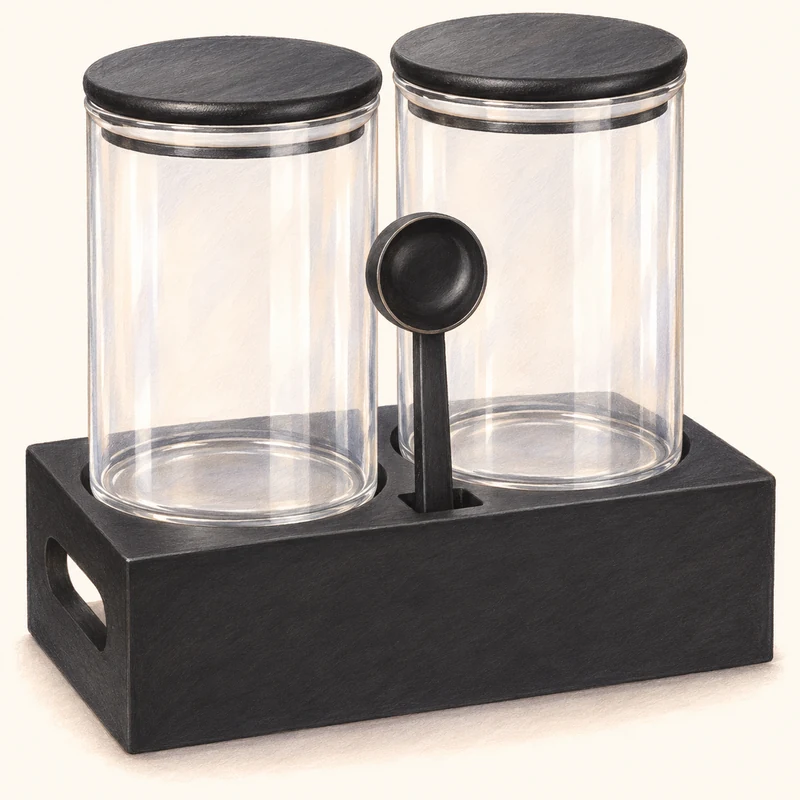
A viewing window or clear jar shows what remains but should not be described as opaque storage. The black-labelled jar pair in the shop has transparent glass with black lids and a black shelf. A removable seal can improve cleaning access, while a leave-in scoop needs enough room for its handle and the closing lid. The Airscapeand Vekenreviewed care instructions say hand wash; do not transfer a scoop's dishwasher permission to the canister it sits in.
Compare the complete counter arrangement
A jar pair with a shelf is a different purchase from a standalone steel canister. Check both the set footprint and the space needed to remove an individual jar. Count actual containers separately from labels, scoops and other props. Dry and reassemble the parts according to their instructions before relying on the closure. Where a volume or package component is uncertain, the product page states that limit instead of converting the most convenient source value.
Explore the relevant departments
Questions from this guide
Does an airtight label guarantee a fixed freshness period?
No tested duration is established here. Closure design is a purchase criterion, not a universal shelf-life promise.
Can a date tracker tell me coffee quality?
No. It records a date manually and does not sense the contents.
Can the scoop always stay inside?
Only if it fits through the opening and allows the intended lid or inner closure to seat correctly. Check the actual container and scoop geometry.
Product examples refer to the reviewed selected variants. Check each product page for the selected contents, fit and any unresolved source differences. This guide does not substitute for the exact equipment's operating or chemical-cleaning instructions.